Jun 05, 2026
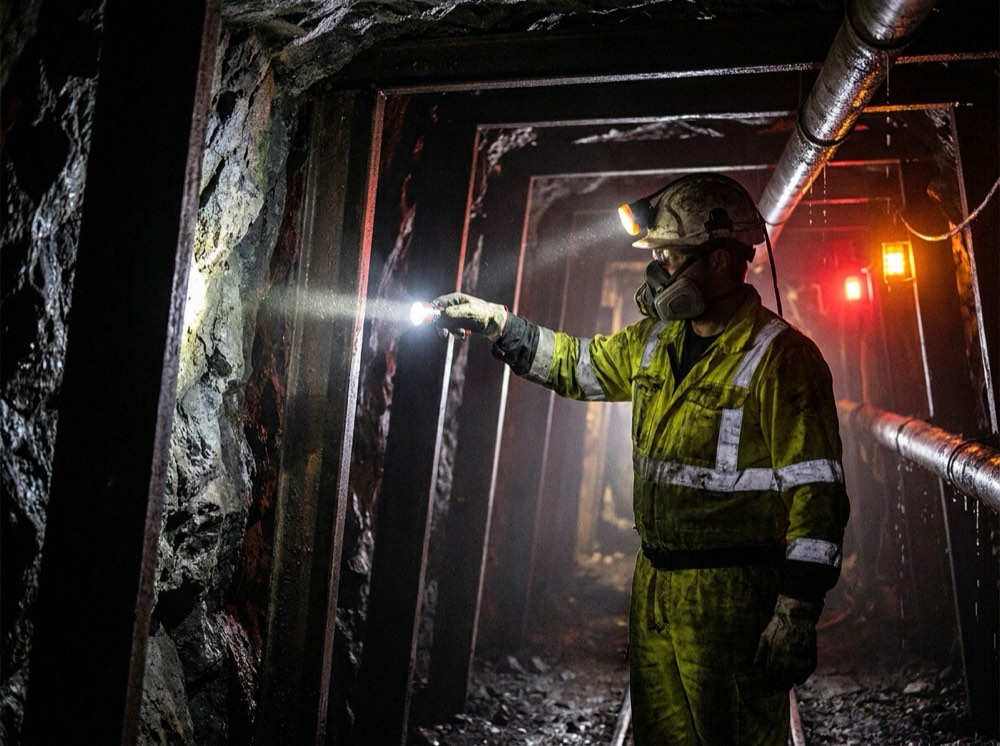
Using a standard flashlight in a classified hazardous area is a serious safety and legal risk. Here is what procurement teams in oil, gas, and mining must understand.
What is ATEX?
ATEX (ATmosphères EXplosibles) is the EU directive governing equipment used in explosive atmospheres. IECEx is the international equivalent. Both certify that a device cannot ignite surrounding flammable gases, vapors, or dust.
Zone Classification
- Zone 0 / Zone 20: Explosive atmosphere present continuously
- Zone 1 / Zone 21: Explosive atmosphere present intermittently
- Zone 2 / Zone 22: Explosive atmosphere present occasionally
Most surface oil & gas operations require Zone 1/2 rated equipment. Underground mining typically requires Zone 20/21 for dust environments.
Intrinsic Safety (Ex i)
Intrinsically safe equipment limits electrical energy so it cannot produce a spark or heat sufficient to ignite the atmosphere. This is the most common protection method for portable handheld devices like flashlights.
What to Specify
- ATEX II 2G (Zone 1) or II 3G (Zone 2) marking
- IECEx certification for international sites
- IP68 waterproof (standard for industrial environments)
- Aluminum alloy body (no magnesium/titanium that can spark on impact)
- Battery: regulated Li-ion only (no unprotected cells)
Aurora AURORA H3 (1400LM dual-beam headlamp) meets IP68 + 6000K daylight output with alert mode for enhanced worker visibility in dark industrial environments.
Expert's Recommendation: EDC & Outdoor
For everyday carry and outdoor adventures, the Aurora E-Series is the industry benchmark:
- Aurora E1 (1500LM): Power Bank function + 26650 5000mAh. Ultimate long-range EDC.
- Aurora E2 (800LM): Compact powerhouse with stepless dimming.
- ArtPro E3: The world's finest ultra-thin tactical EDC for discreet carry.